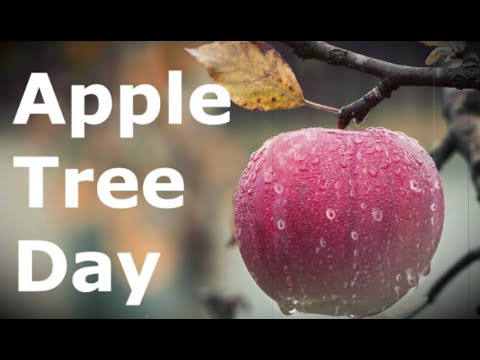
We celebrate “Apple Tree Day” on January 6 to honor the great tradition of growing and cultivating apples across the world. Introduced to the region by colonists in the 17th century, apple farming has been leading the fruit production industry in the U.S. for a century. Now apple cultivation is wide spread in the world. From cider to pies, the apple is a greatly versatile fruit with tremendous health benefits and a mouthwatering taste. Apple trees are rendered with great significance in our culture. Ancient mythology regards an apple tree as a sacred symbol of good health and prospective happiness. Aphrodite, the goddess of love, shared a deep association with an apple tree, calling it the ‘Tree of Love’. Apples provide vitamins A and C, are high in carbohydrates. Apples are packed with fiber and healthy flavonoids that help burn rigid belly fat. They are also rich in pectin fiber that promotes satiety. Hence, apples complement the process of burning fat, but they do not aid in direct weight loss. Apple, (Malus domestica), domesticated tree and fruit of the rose family (Rosaceae), one of the most widely cultivated tree fruits. Apples are predominantly grown for sale as fresh fruit, though apples are also used commercially for vinegar, juice, jelly, apple sauce, and apple butter and are canned as pie stock. A significant portion of the global crop also is used for cider, wine, and brandy. Fresh apples are eaten raw or cooked. “An apple a day keeps the doctor away”

Apple Tree Day