

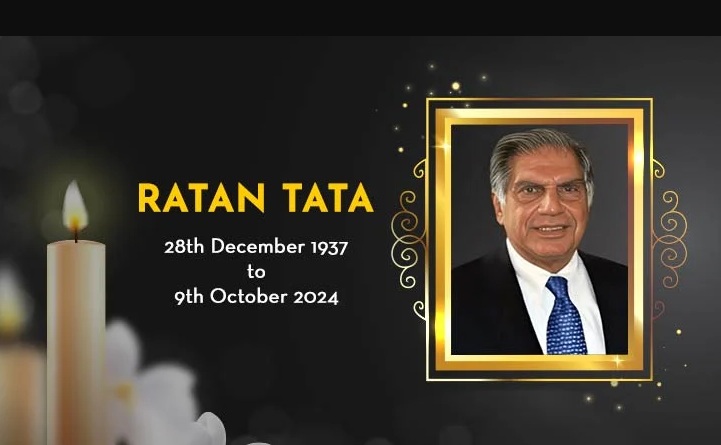
Ratan Tata passed away at Breach Candy Hospital in Mumbai on October 9,2024.
Ratan Tata’s remarkable journey is a testament to visionary leadership, resilience, and philanthropy. As chairman of the Tata Group, he transformed the conglomerate into a global powerhouse, spearheading innovations and strategic acquisitions. His commitment to ethics and social responsibility shines through in initiatives like the Tata Nano, making cars accessible to millions.
He was the son of Naval Tata, who was adopted by Ratanji Tata, son of Jamsetji Tata, was the founder of the Tata Group. He graduated from the Cornell University College of Architecture with a bachelor’s degree in architecture.
He joined Tata in 1961, where he worked on the shop floor of Tata Steel. He later succeeded J. R. D. Tata as chairman of Tata Sons upon the latter’s retirement in 1991. Under his tenure the Tata Group acquired Tetley, Jaguar Land Rover, and Corus, in an attempt to turn Tata from a largely India-centric group into a global business. Tata is also one of the largest philanthropists in the world, having donated around 60–65% of his income to charity.
Ratan Tata was also a prolific investor and has made numerous investments in several startups. Tata has invested in over 30 start-ups to date, most in a personal capacity and some via his investment company.
Post-retirement, Ratan Tata continued to inspire through:
• Investments in startups, fostering entrepreneurship
• Philanthropic efforts, focusing on education, healthcare, and rural development
• Unwavering dedication to integrity and corporate governance
As a licensed pilot he would occasionally fly the company plane. He was never married but came close to marry and that never happened due to some reason. He was known for his quiet demeanour, relatively modest lifestyle and philanthropic work. About two-thirds of share capital of Tata Sons, the group’s holding company, is held by philanthropic trusts.
Ratan Tata and Cyrus Mistry had a boardroom feud at the Tata Group, India’s largest business conglomerate.
The feud created a stir in the Parsi community, to which both Tata and Mistry belong. The case also highlighted the importance of corporate governance, including succession planning, the role of independent directors, and the rights of minority shareholders.
Cyrus Mistry, the former chairman of Tata Sons, died in a car crash on a highway near Mumbai on September 4, 2022.
Ratan Tata’s story encourages us to:
• Dream big, yet remain grounded
• Prioritize ethics and social impact
• Foster innovation and entrepreneurship
• Give back to the community

